Every name feels brilliant for about a week. You say it once at dinner, someone nods, and by the weekend you've imagined the signage, the packaging, and the launch post. Then you try to type it into a browser and the domain belongs to a parking page in another country.
Naming mistakes get expensive after launch, not before. The twelve tests below are worth running while the name still lives in a notes app, where changing it costs little more than a bruised ego. Work through them in order. The first two can end the conversation early, and that's a good thing.
1. Clear the legal ground first
Test 1: Search the trademark register. In the US, that's the USPTO's database; the UK, EU, Canada, and Australia all run equivalents. Search the exact name, then search for phonetic twins and close variants, and pay attention to the classes of goods and services. A mark that's fine for a coffee roastery can still block a software company, and the reverse is true too.
Test 2: Check unregistered use in the market. A registered mark isn't the only obstacle. Companies that have been trading under a name without registering it can still have rights in their territory. Search the app stores, your national company register, social platforms, and page one of search results for the name as a business, not just as a word.
Where this gets serious
Nothing here is legal advice, and a five-minute search is not a clearance opinion. If you're about to spend real money on a name, have a trademark attorney run the search and tell you what the risk actually is. It is one of the cheapest forms of insurance in branding.
2. Say it out loud, repeatedly
Test 3: The phone test. Imagine calling a client: "Hi, this is Dana from ___." Can they hear it once and know what you said? If you have to add "that's B as in Bravo," you've built a small tax into every introduction.
Test 4: The spelling test. Ask someone to write the name down after hearing it once. Then ask a second person. If both hesitate, expect to spell it for the rest of the company's life.
Test 5: The noisy-room test. Say it across a loud restaurant, read it aloud as a podcast host would, and imagine a voice assistant trying to pronounce it. Names with clusters of consonants, invented spellings, or ambiguous vowels tend to fail here.
Warning signs in the sound itself
- Silent letters or letters that don't match the sound (a "ph" that behaves like an "f").
- Numbers, hyphens, or apostrophes in the core name.
- Deliberate misspellings — "Kwik," "Lite," "Phresh" — which date quickly and confuse spellcheck.
- Words that collide with something unfortunate in another language you might sell into.
3. Check the ground you'd actually stand on
Test 6: Domain availability. A .com isn't mandatory, but it is the default, and it's what people will type. If it's gone, look hard at the alternative before you settle. Prefixes like "get," "try," or "weare" usually read as a workaround. And always run the words together to check for accidental words created by the squish — this is where otherwise lovely names become accidental jokes.
Test 7: Handles and platforms. Check the social platforms you'll genuinely use, plus the app stores if you'll ship software. Having one consistent handle everywhere matters more than owning every network that exists. Consistency builds recall; a patchwork invites confusion.
Test 8: Page one today. Search the name before you fall in love with it. If a much larger company dominates the results, you'll spend years being the second result for your own name. That's survivable for a local business and painful for anyone who needs to be found online.
4. Test it against the people who'll say it
Test 9: The customer sentence. Write one line a real customer would say out loud: "I got it from ___," or "We use ___ for our packaging." If the sentence sounds awkward or embarrassing, the name will feel that way in every referral.
Test 10: The competitor shelf. Put the name in a list with three or four rivals. Does it belong on the same shelf, or does it read as either a copy or an outlier? You want distinct, not alien.
How to run a quick audience test
Don't ask people whether they like it — you'll get polite noise. Ask better questions: What do you think this company does? What would it sell, and roughly how much would it cost? Write it down while I say it. Then wait a week and ask what they remember. Recall after seven days tells you far more than a reaction after seven seconds.
5. Stress-test the future
Test 11: The ten-year stretch. Names die from being too narrow. A bakery called Sourdough Only can't sell cakes. Naming yourself after one city, one product, one technology, or one founder's surname all create ceilings. Ask where you want to be in a decade, then ask whether the name can hold that.
Test 12: The boring day. Would you say it to a bank, on a hiring ad, in a contract, and in an investor deck without wincing? Can you add a sub-brand — "Name Studio," "Name Labs" — when you launch something new? A name that only works in a playful visual identity isn't a name; it's a costume.
Good names aren't the ones that pass every test. They're the ones whose weak spots you've named, priced, and decided to live with.
Make the call without stalling
Give yourself a deadline and a short list — two or three finalists, no more. Score each one pass or fail against the twelve tests on a single page. Most strong names will clear ten and stumble on two: perhaps the .com is gone but the .co is clean, or the spelling test is fine but the trademark search needs an attorney's eye.
When you've chosen, do these things in the same week:
- Buy the domains and register the handles, even the ones you're unsure about yet.
- Start the trademark conversation before you print anything.
- Write one paragraph explaining the name's story, and keep it somewhere you can find it. You'll be asked about it for years, and the answer should be the same every time.
Then stop second-guessing. The energy you spend relitigating a name is energy not spent making it mean something — which, in the end, is what turns a decent name into a good one.
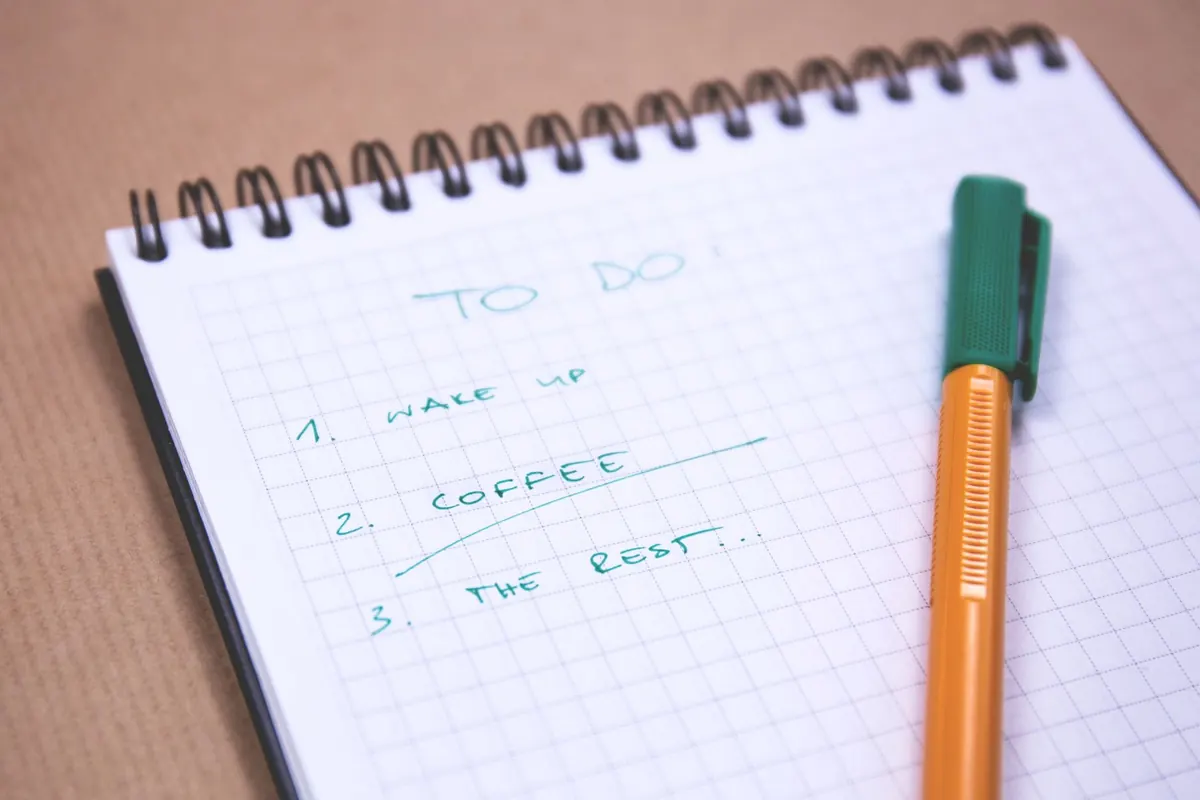
Photo: freestocks.org / Pexels